AI Voices Are Fast – But Speed Isn’t Everything
AI voices have come a long way in a short space of time. They’re fast, scalable, and can produce large volumes of audio at very low cost. For basic information delivery or internal content, they absolutely have their place.
But voiceovers aren’t just about reading words out loud. They’re about tone, intent, pacing, and understanding the why behind a script. And that’s where AI still falls short.
Audiences can hear the difference. They might not always be able to explain it, but they can feel it, especially in advertising, storytelling, brand messaging and anything emotional or persuasive.
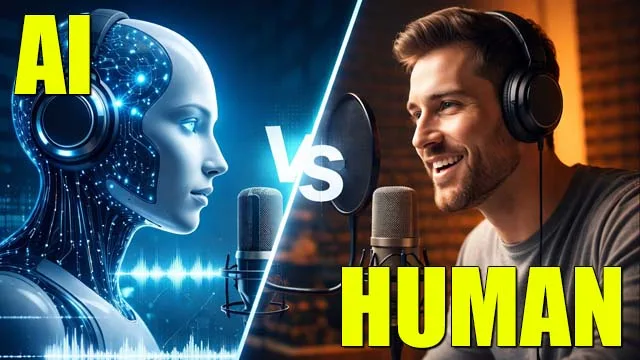
AI Voices vs Human Voiceovers – What’s the Real Difference?
Why Human Voiceovers Still Win
A human voiceover reacts to a script rather than simply reading it. We interpret meaning, emphasise the right words, adjust timing instinctively, and respond to feedback creatively.
Real voices bring warmth, credibility and trust. They can be playful, authoritative, reassuring or dramatic, often all within the same read. And crucially, they adapt in real time to direction, context and brand tone.
AI can imitate sound. Humans deliver intention. When your message matters, that difference is huge.
AI vs Human Voiceovers – The Bottom Line
AI voices are improving quickly and they’re not going away. Used sensibly, they can be useful for drafts, internal content or high-volume projects where emotion isn’t the priority.
But when a voice needs to persuade, reassure, entertain or build trust, a real human performance still delivers something AI simply can’t replicate. Subtle timing, emotional intelligence and creative instinct are what make audiences listen.
In short: AI voices can speak. Human voiceovers communicate. And for brands that care about how they’re heard, that distinction still matters.
Need a voice for something similar? Send me a quick message and I'll get back to you.